
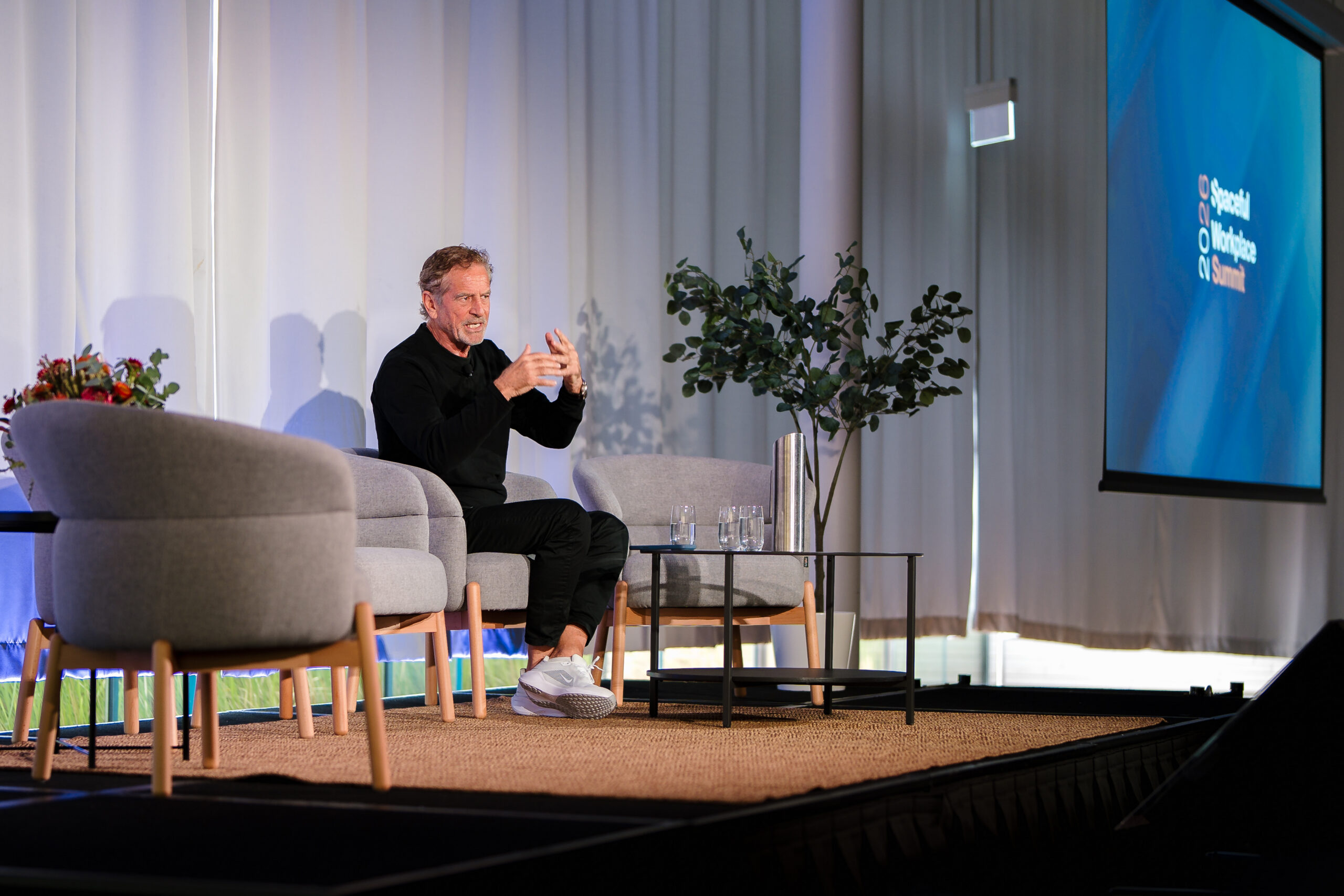
His keynote covered inflation, business confidence, AI, productivity and the broader economic pressures shaping organisations. While much of the discussion focused on market conditions, the workplace implications were significant.
As Mark said, “if you’re in business and you want to be a leader, you must give the business resilience.” That raises an important question for workplace leaders: how can the workplace help an organisation stay clear, connected and ready to respond when conditions change?
The workplace now closer to business strategy
A clear theme from Mark’s keynote was the need for leaders to understand the forces shaping their organisations. He told the room there is now an “expectation of leaders to understand business shifts and economic shifts.”
That matters because economic pressure, interest rates, technology change and labour market shifts are influencing how businesses plan, invest and operate. Each of these has direct implications for the workplace.
The office now sits closer to core business decision-making. It affects how people work, how teams connect and how organisations respond to pressure. Workplace decisions therefore need to be tied more closely to business strategy, financial priorities and future direction.
In a cautious market, every major investment is under greater scrutiny. Workplace strategy is no exception. Leaders need clear answers to fundamental questions including, what is the office for, what value is it creating and how does it support the way the business needs to perform?
AI is changing work, and space needs to keep up
Mark also spoke about AI as one of the major forces reshaping business. His point was that leaders need to understand its impact on productivity, decision-making and the structure of work itself.
That matters because changes in work eventually show up in the workplace. As AI becomes more embedded in daily operations, organisations will need to reassess where collaboration happens, where focused work happens, and what kind of environment supports both.
Some work will become faster and more individual. Other activities, including mentoring, decision-making and team alignment, may depend even more on high-quality in-person interaction.
Workplace strategy needs to respond to where work is heading, rather than where it has been.
Productivity needs a sharper workplace conversation
Another key takeaway was the pressure on productivity. That pressure is shaping decisions about investment, headcount and performance across sectors. Mark spoke about the need to think ahead when planning for people, space and workplace settings, saying he is always following the economy when making decisions about future staffing, desks, seats and workplace requirements.
That is where workplace strategy becomes practical. It is about understanding what the business is preparing for, then making decisions about space, flexibility, density and experience that support that direction. For workplace leaders, that requires a broaderconversation than attendance alone.
A productive workplace should be measured by how well it supports the outcomes the business needs. That includes focus, connection, learning, accountability and culture. In many organisations, it also means achieving more from a smaller footprint and ensuring every part of the workplace has a clear purpose.
Different spaces serve different functions. Different days in the office create different types of value. The strongest workplace strategies align space with real work patterns, rather than assumptions.
Confidence matters when the margin for error is smaller
Mark’s remarks also reflected what many businesses are experiencing now: there is less room for error. Decisions about people, technology and the workplace all carry greater weight in a more pressured environment. As he put it, “business shifts have to be in accordance with how the economy is going.”
The same applies to workplace decisions. They need to be grounded in the commercial realities facing the organisation, while still supporting the people expected to deliver through those conditions. Workplace leaders need stronger evidence, clearer prioritiesand a closer link between workplace decisions and business outcomes.
The organisations best placed to respond are the ones treating the workplace as a strategic lever. They are asking sharper questions about what their people need, what their business needs, and how the physical environment can support both.
What comes next
Mark’s keynote set the scene for an important conversation. It reinforced that workplace decisions sit inside a wider business environment shaped by economic pressure, technology change and rising expectations of leadership.
For workplace leaders, the bar is higher. The challenge is to create a workplace that is resilient, relevant and aligned to how the organisation needs to perform.
Our panel discussion explored that theme in more detail, looking at what it means in practice across people, AI, culture and workplace strategy.