
Flexible work is already well established across many Australian workplaces. But Victoria’s work-from-home legislation raises a different question: what happens when an arrangement traditionally agreed between an employer and employee becomes a legislated right?
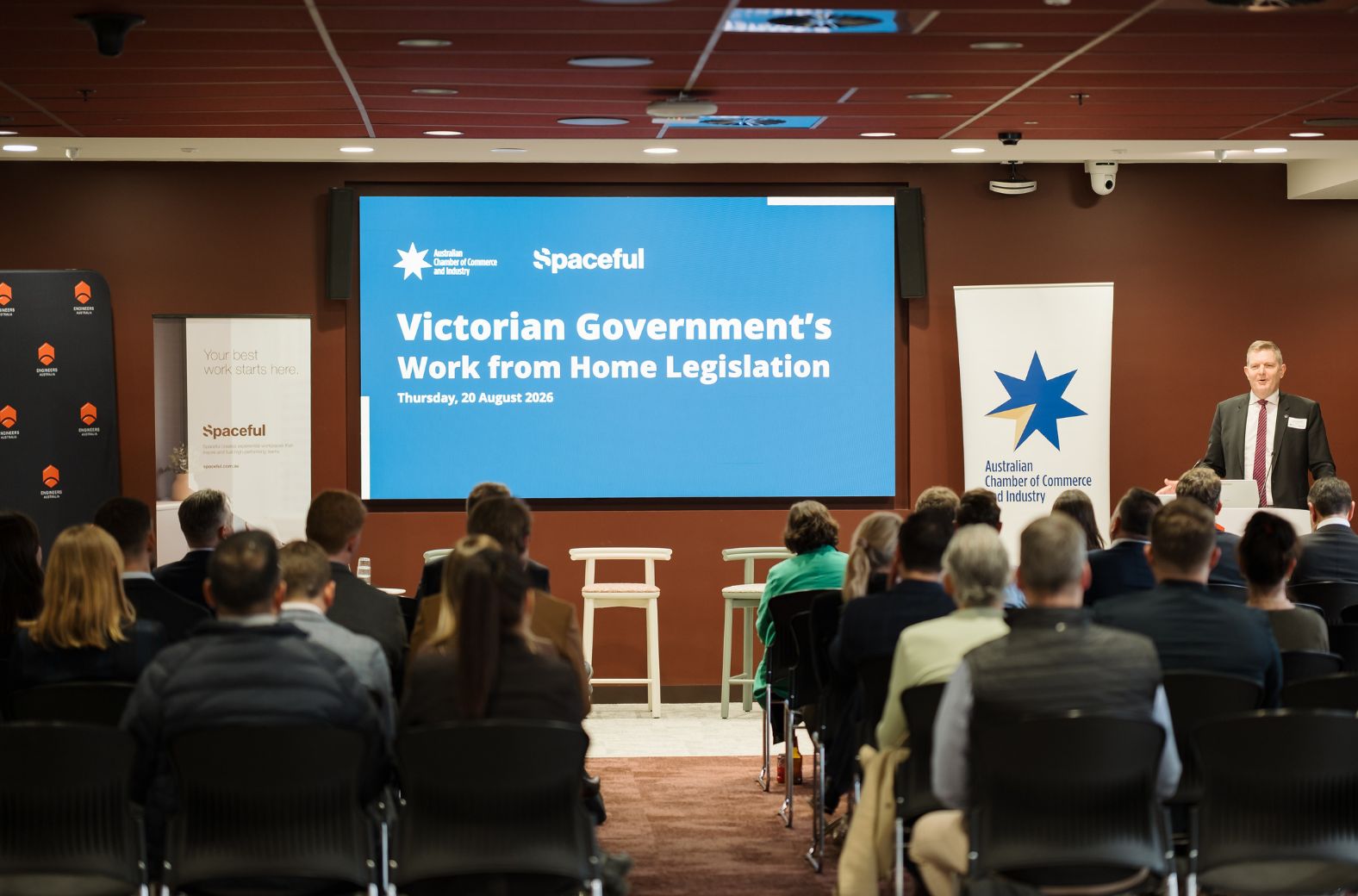
Spaceful recently partnered with the Australian Chamber of Commerce and Industry (ACCI) to explore the issue with business leaders at Engineers Australia’s Melbourne workplace, designed and delivered by Spaceful.
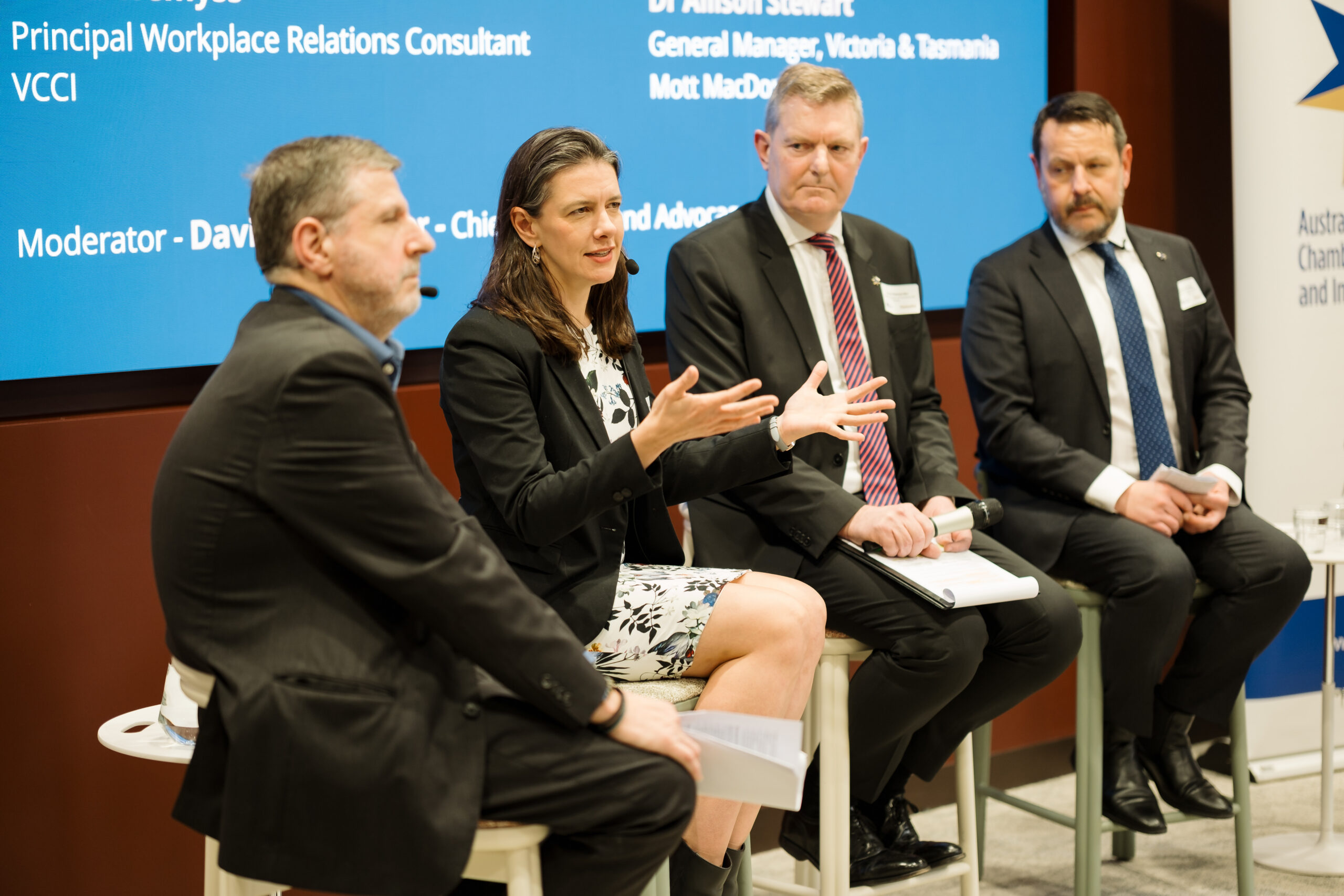
The panel brought together David Alexander, Chief of Policy and Advocacy at ACCI; Shaun Schmitke, Head of Workplace Relations at ACCI; David Wemyss, Principal Workplace Relations Consultant at the Victorian Chamber of Commerce and Industry; Chris Molnar, Partner at Kennedys; and Dr Allison Stewart, General Manager Victoria & Tasmania at Mott MacDonald.
The discussion went beyond how many days people might work from home, covering cost, safety, productivity, workforce management and workplace culture.
What is changing with Victoria’s work-from-home legislation?
The Victorian Government has introduced legislation to enshrine a right to work from home in the Equal Opportunity Act. The Bill has passed the Legislative Assembly and is progressing through Parliament.
Under the legislation, eligible Victorian employees who can perform their role from home would have a legal right to do so for two days a week, rather than relying only on existing flexible working arrangements and rights to request under federal workplace law.
The original Bill was due to take effect from September 2026, with a later commencement for smaller employers. The Government has since announced that implementation will be delayed until 1 July 2027 for all businesses, allowing more time for consultation and potential amendments.
Questions remain around how the legislation will operate in practice, including its interaction with the Fair Work Act, how some obligations will be applied and how businesses should prepare. The panel’s message was to use the additional time to understand those implications rather than put the issue aside.

What could the legislation mean for employers?
One of the strongest themes was the need for greater clarity about where, how and why different roles need to operate.
David Wemyss explained that under the legislation, employers seeking to refuse a work-from-home arrangement in some circumstances may need to demonstrate its impact on the business.
Panellists recommended reviewing position descriptions and clearly documenting the inherent requirements of each role. If physical presence matters for client service, collaboration, supervision, access to equipment or another operational reason, businesses should understand and document why.
The panel also raised concerns about how disputes could be resolved and the potential time and cost involved if matters progress through the Equal Opportunity Commission and the Victorian Civil and Administrative Tribunal (VCAT).
Who could pay the costs of working from home?
The potential cost to employers was a major concern. The legislation could create obligations around reasonable costs associated with working from home, although exactly what constitutes a reasonable cost remains unclear.
Examples ranged from ergonomic furniture and internet access to technology and security and equipment required to perform a role. Dr Allison Stewart also raised questions around confidentiality where multiple people are working from the same home.
For employers, the question becomes what an appropriate home workspace looks like for different roles, what is required to work effectively and where responsibility for those costs sits.

Does working from home change an employer’s safety responsibilities?
Working from home does not remove an employer’s existing health and safety responsibilities.
Chris Molnar raised the possibility that employers may need access to the part of an employee’s home used for work to assess whether it is safe, creating an obvious tension between an employer’s duty of care and an employee’s privacy. The panel stressed that the boundaries of how this would operate remain unclear.
There are also implications for the office itself. More variable attendance can affect fire warden coverage, first aid and other responsibilities that depend on particular people being present.
How could the legislation affect workplace culture?
Dr Allison Stewart spoke about balancing what works for an individual with what teams and organisations need collectively.
Working from home can provide focus, flexibility and balance. But informal conversations, mentoring, collaboration and social connection often happen more naturally when people are together.
The challenge for businesses is to create a workplace where people gain value from being in, while providing appropriate flexibility elsewhere. Rather than positioning employers and employees on opposing sides, businesses need clarity about what different types of work require and what their people, teams and organisation need to perform well.
Could Victoria’s work-from-home laws affect businesses outside the state?
For national organisations, different obligations between states could add another layer of complexity. A business might operate one flexible working policy nationally while facing different legal requirements depending on where an employee is based.
The panel also discussed potential wider economic effects. Shaun Schmitke raised the possible impact of changing attendance patterns on CBD vacancy, foot traffic and businesses such as cafés and retailers that rely on office workers. The discussion also touched on potential remuneration pressure for roles where working from home is not possible.
These were raised as possible flow-on effects rather than quantified outcomes, but they demonstrate why the debate extends beyond workplace policy alone.
What should businesses do now?
The legislation is still progressing through Parliament and may change before it takes effect, but businesses can start reviewing how flexible work operates now.
Practical steps raised during the discussion included:
- Reviewing position descriptions and the inherent requirements of roles
- Reviewing work-from-home policies, flexible working policies and employment contracts
- Understanding the equipment, costs and safety requirements associated with remote work
- Considering how changing attendance patterns affect office operations
- Being clear with employees and candidates about expectations around where and how work happens
Businesses should also be clear about why they want people to come together. Some work benefits from privacy and concentration, while other work relies on collaboration, mentoring, creativity, client interaction and informal exchanges.
Legislation may influence the framework, but it cannot determine the right workplace model for every organisation. That is something each business needs to define for itself.