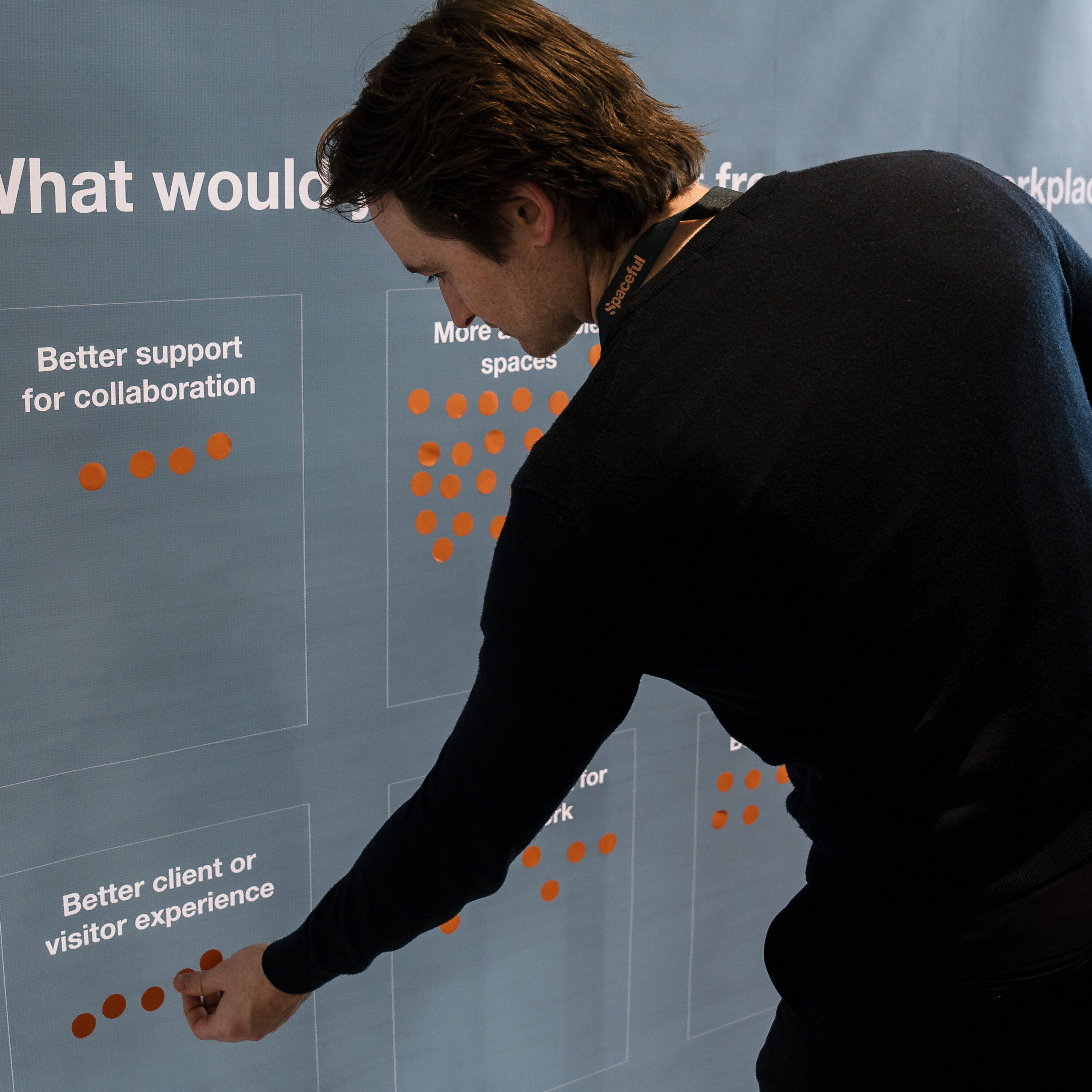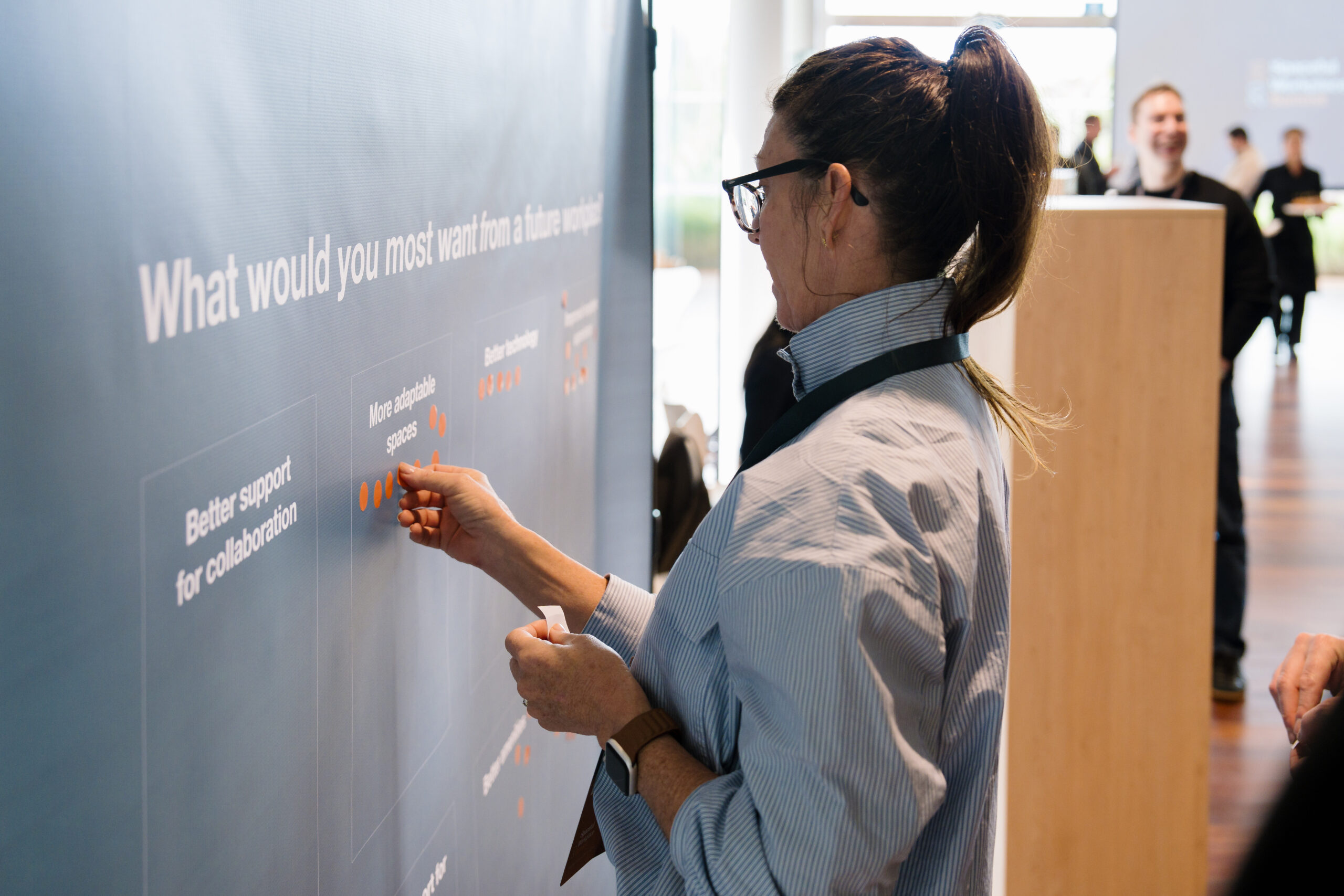
At the 2026 Spaceful Workplace Summit, guests were asked a simple question: what would you most want from a future workplace? The strongest response was improved employee experience, followed by more adaptable spaces and better technology. Other priorities included better client or visitor experience, stronger support for focus work, better amenities, stronger collaboration and closer alignment with brand and culture.
These results give a useful pulse check on what business and workplace leaders are prioritising in the workplace. The future office is not just about getting people back in, it’s about creating spaces that work better for the people using them.
Why is employee experience the top workplace priority?
Employee experience is becoming a top workplace priority because people are more intentional about when and why they use the office. If the workplace does not support the working day, people notice. That includes how easy it is to focus, meet, collaborate, access technology, connect with colleagues and move between different types of work.
“Asking people to come into the office is only part of the conversation. The more important question is whether the office gives them a better day at work once they are there.”
Why do adaptable spaces matter?
Adaptable spaces matter because work changes throughout the day, across teams and over time. A future workplace needs to support focused work, collaboration, learning, client conversations, informal connection and hybrid meetings. Fixed layouts that only solve for one type of work are less useful in a changing business environment.
“The strongest workplaces are not designed around a single workstyle. They give people choice, while still supporting the rhythm and priorities of the business.”
Why is better technology important in the office?
Better technology is important because it directly affects whether the workplace feels easy or frustrating to use. Hybrid meetings, shared spaces, presentation areas and team collaboration all rely on reliable technology. When technology does not work, it creates friction and weakens the value of being in the office.
The Summit response suggests that technology is no longer seen as a separate workplace feature. It is part of the core employee experience.
What does this mean for workplace leaders?
The results point to a practical message for workplace leaders: the future office needs to earn its place. That means shifting the conversation from attendance to value. A successful workplace should help people do their best work, support connection, remove friction and reflect how the business wants to operate.
For organisations considering a relocation, this is an opportunity to reset. Rather than carrying old workplace problems into a new office, leaders can use the move to create a more adaptable, better connected and more employee-focused environment.
Key takeaways
The sticker wall from the 2026 Spaceful Workplace Summit highlighted three clear priorities for the future workplace:
- Employee experience needs to be treated as a core business priority.
- Adaptable spaces are essential as teams, workstyles and business needs change.
- Technology plays a central role in whether the office works well day to day.
The future workplace should help people work better, connect more easily and make better use of their time in the office.