

The best time to manage many office project risks is before they become construction problems.
An incomplete brief, building constraint, unclear services requirement or design decision can all create issues later if they are not worked through early.
Technical project management brings cost, programme, buildability and risk into the conversation while the brief, property and design are still being shaped.
Why does early involvement have more impact?
Early in a project, there are more options. The brief can be adjusted, building constraints investigated, designs changed and different delivery approached considered.
As the project moves forward, approvals are secured, documentation develops and procurement begins. Decisions become more connected and harder to change.
This is often illustrated by the MacLeamy Curve, which shows the relationship between a project’s ability to influence an outcome and the increasing cost of making changes as it progresses.
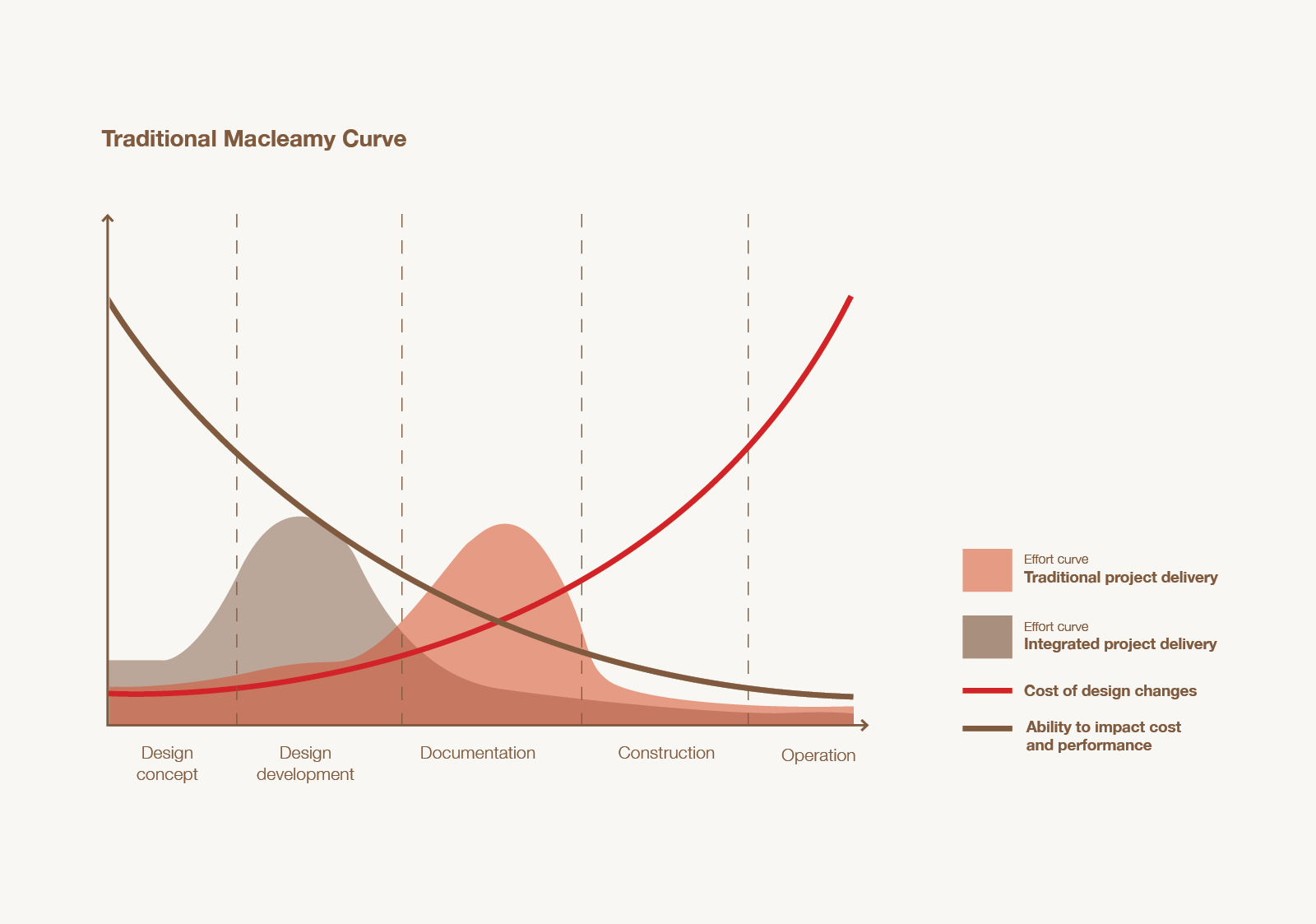
For an office relocation, bringing technical, cost and delivery expertise in early gives the project team more opportunity to shape decisions before they become harder and more expensive to change.
When do office project risks begin?
Many project risks emerge while the brief, property and design are still being developed.
A tenancy may be selected before its technical limitations are fully understood. A brief may miss important requirements. A design may progress without enough visibility of building services or procurement constraints.
These issues may not cause an immediate problem, but they can create assumptions that are only uncovered later.
Technical project management helps identify and resolve more of these issues while the property, scope or design can still be adjusted.
How does a stronger brief reduce scope creep?
Scope creep is often treated as a construction issue, but it often starts with an incomplete understanding of what the workplace needs.
Without proper planning, requirements around meeting rooms, technology, security, storage, specialist spaces, acoustics, wellbeing or future growth can emerge as the project develops.
Some change is unavoidable, but a clear workplace and technical brief reduces the chance of important requirements being discovered late. It also gives the project team a clearer baseline for design, cost and programme decisions, and makes later changes easier to assess.
Why should technical due diligence happen before a property commitment?
A tenancy can look right on a floorplan but still create technical or commercial challenges.
Power capacity, air-conditioning, fire requirements, vertical transport, structural constraints, access, acoustics, landlord requirements and approvals can all affect the cost and complexity of a fit-out.
Early technical due diligence helps businesses understand those implications alongside the size, location and commercial terms of the property.
Spaceful’s technical team assesses shortlisted buildings through site inspections, document reviews and specialist consultant input where required.
The building itself can influence fit-out cost, programme and how closely the final workplace can meet the brief.
When should cost planning begin?
Cost planning is most useful when it helps shape design decisions, not when it checks them at the end.
In a more traditional approach, significant cost pressures often emerge once a developed design is tendered. If the project is over budget at that point, getting it back on track can mean costly redesigning work, specification changes or removing elements that have already been approved.
Last minute “value engineering” is often simply cutting scope to save cost, not actually engineering an outcome that represents value.
Bringing cost and buildability into the design process earlier gives the team more opportunity to compare options and understand the impact of decisions before they are locked in.
Spaceful’s technical team brings cost planning, procurement, programme and buildability into the design process so design and budget develop together.
“The earlier the right questions are asked, the more options there are. Once construction starts, the same decision usually involves more people, more coordination and fewer ways to resolve it without affecting cost or programme.”
Why does programme management need to start before construction?
Office relocations often have fixed commercial deadlines, including lease expiries, make-good obligations, employee move dates, technology cutovers and landlord commitments.
Construction is only one part of that programme.
Property decisions, design approvals, specialist consultant input, procurement lead times, landlord reviews, authority approvals and technology requirements can all affect the move date before work starts on site.
Early technical project management helps identify these dependencies, clarify who needs to make each decision and establish when it needs to happen.
That gives the project team more time to respond if something starts to affect the programme.
Does early involvement mean committing sooner?
No. Early engagement should give a business more time to investigate and compare its options before making major commitments.
Different properties can be assessed, workplace scenarios tested, technical constraints investigated and the emerging design costed as it develops.
The aim is to make decisions with better information and fewer unresolved assumptions.
Why does this matter to business leaders?
Cost increases and programme delays are often the result of decisions or gaps that happened earlier.
Leaders do not need to become experts in construction. They need confidence that key assumptions have been tested, risks are visible and the impact of major decisions is understood before significant property and capital commitments are made.
Bringing workplace strategy, design, technical expertise, cost planning and construction together early creates a stronger basis for those decisions.