
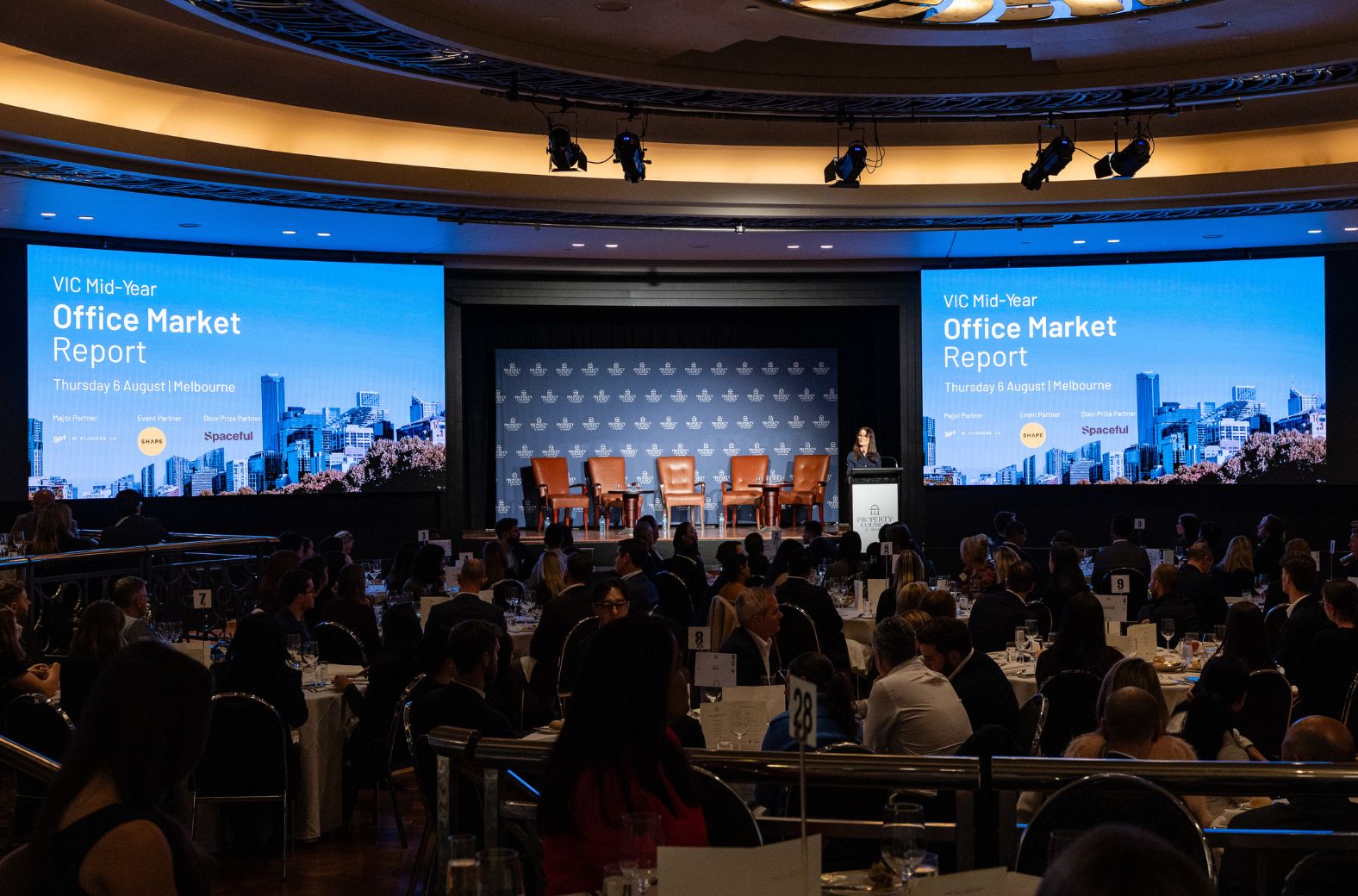
At Property Council of Australia office leasing report release events in Melbourne and Sydney, Spaceful surveyed over 330 commercial property professionals, including asset managers, building owners, landlords and others working across the office market.
We asked what they are seeing across the market, including what is prompting workplace reviews, where organisations are most likely to make mistakes when moving office, and what clients value in a fit-out partner.
The results point to the importance of planning early. Lease events may set the timing for an office move, but businesses need clarity on their workplace requirements, budget and programme well before a property decision is finalised.
What is triggering businesses to review their workplace?
Lease expiry was the most commonly observed trigger, selected by 195 respondents (59%) across both events.
Business growth or headcount change followed, selected by 107 respondents (32%). Poor workplace experience or low attendance was identified by 59 respondents (18%), while 56 respondents (17%) cited building quality, amenities or location.
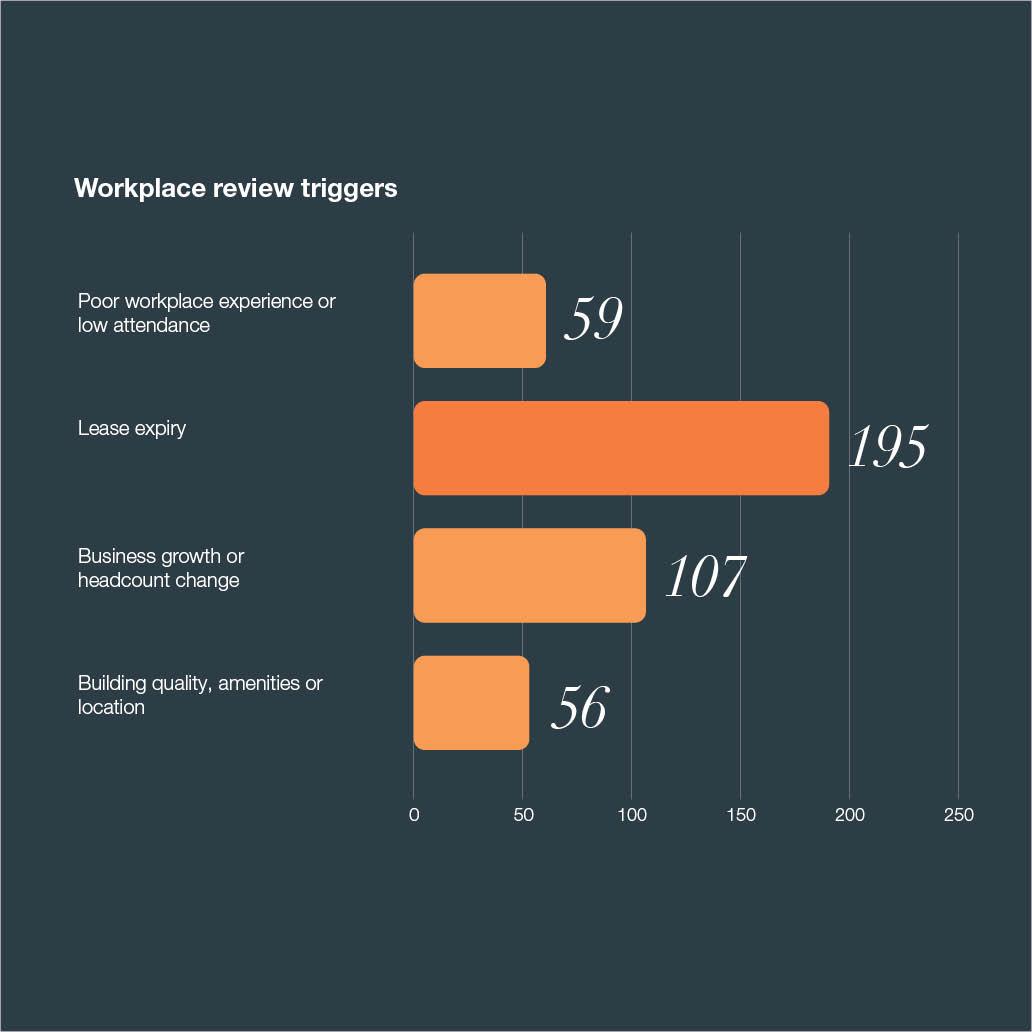
The prominence of lease expiry reinforces how strongly property timelines influence workplace decisions.
For businesses approaching a lease event, planning early creates more room to make the right property decision. Before committing to a new office, leaders need to understand how much space they require, how teams will use it, where the workplace needs to be located and what can realistically be achieved within the available budget and timeframe.
Those requirements can then be used to assess potential properties, rather than trying to make the workplace brief fit a property that has already been selected.
Where do businesses make mistakes when moving office?
Underestimating cost, programme or delivery risk was the most common mistake identified, selected by 115 respondents (35%) across both events.
The remaining responses were close behind:
- 102 (31%) said failing to engage the right stakeholders early enough
- 101 (31%) said failing to connect strategy, design, cost and delivery
- 89 (27%) said signing a lease before fully understanding workplace needs
The four responses are closely connected. If workplace requirements are unclear when a lease is signed, the property may place unnecessary constraints on the project. If design develops without enough input on cost and buildability, businesses can face redesign, budget pressure or programme changes later. If key stakeholders are involved too late, important requirements can emerge after major decisions have already been made.
Getting the brief, budget and programme right early gives businesses more control over cost, timing and delivery. It also gives the project team a clearer basis for decisions as the workplace moves from strategy through design and construction.
Are Melbourne and Sydney seeing the same pressures?
Lease expiry was the leading trigger in both markets, selected by 90 Melbourne respondents (62%) and 105 Sydney respondents (57%).
The larger differences appeared around the quality and performance of the existing workplace, and around delivery risk.
In Melbourne, 44 respondents (30%) identified building quality, amenities or location as a trigger for workplace review, compared with 12 respondents (6%) in Sydney.
Poor workplace experience or low attendance was selected by 41 Melbourne respondents (28%), compared with 18 Sydney respondents (10%).
There was also a clear difference in perceptions of project risk. 67 Melbourne respondents (46%) identified underestimating cost, programme or delivery risk as a common mistake, compared with 48 Sydney respondents (26%).
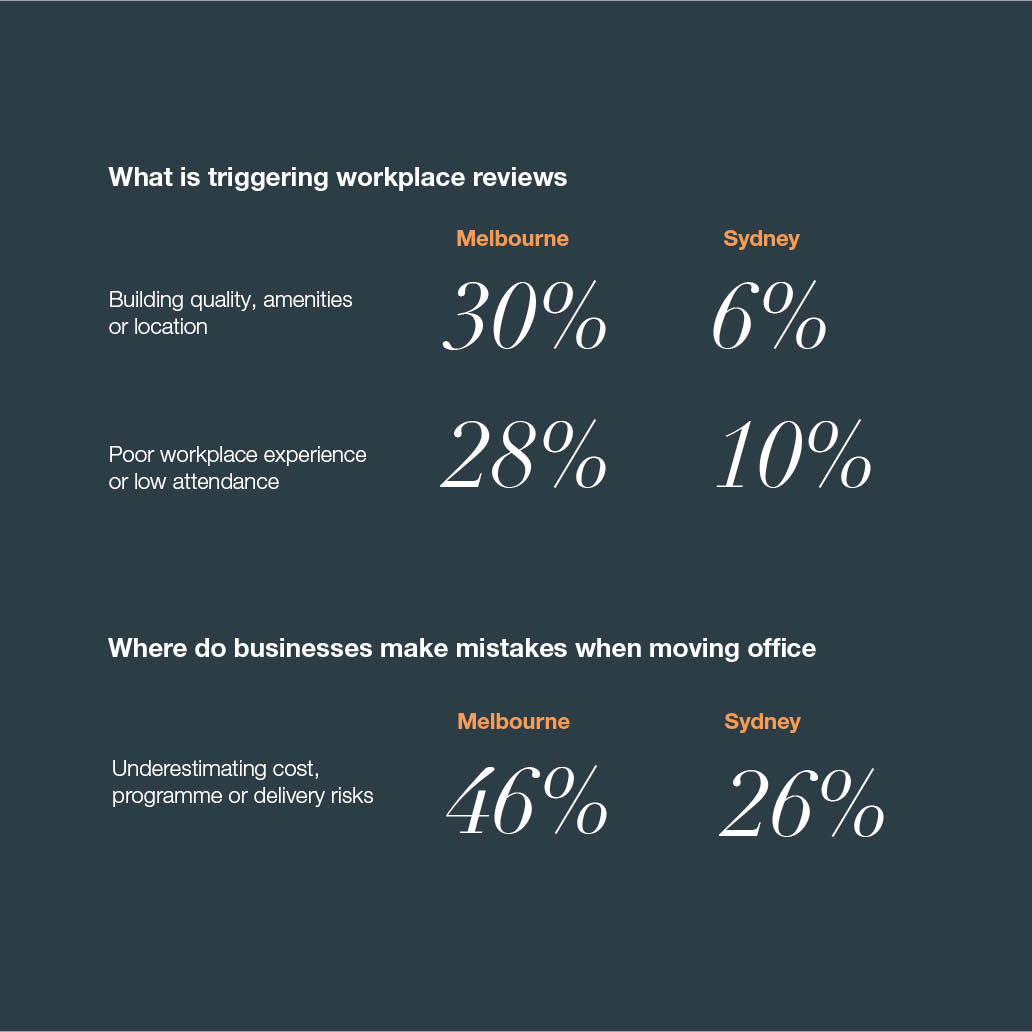
While these findings should not be used as representative measures of the entire Melbourne and Sydney markets, they show that the reasons businesses move and the challenges they face can vary between markets. For businesses, that reinforces the value of assessing their own requirements rather than relying on broad assumptions about how much space they need or what type of workplace they should create.
What do businesses look for in a fit-out partner?
Quality and design was the strongest theme, identified in 86 responses (26%).
Communication and understanding followed with 57 responses (17%), while experience and capability appeared in 43 responses (13%) and trust and transparency in 38 responses (11%).
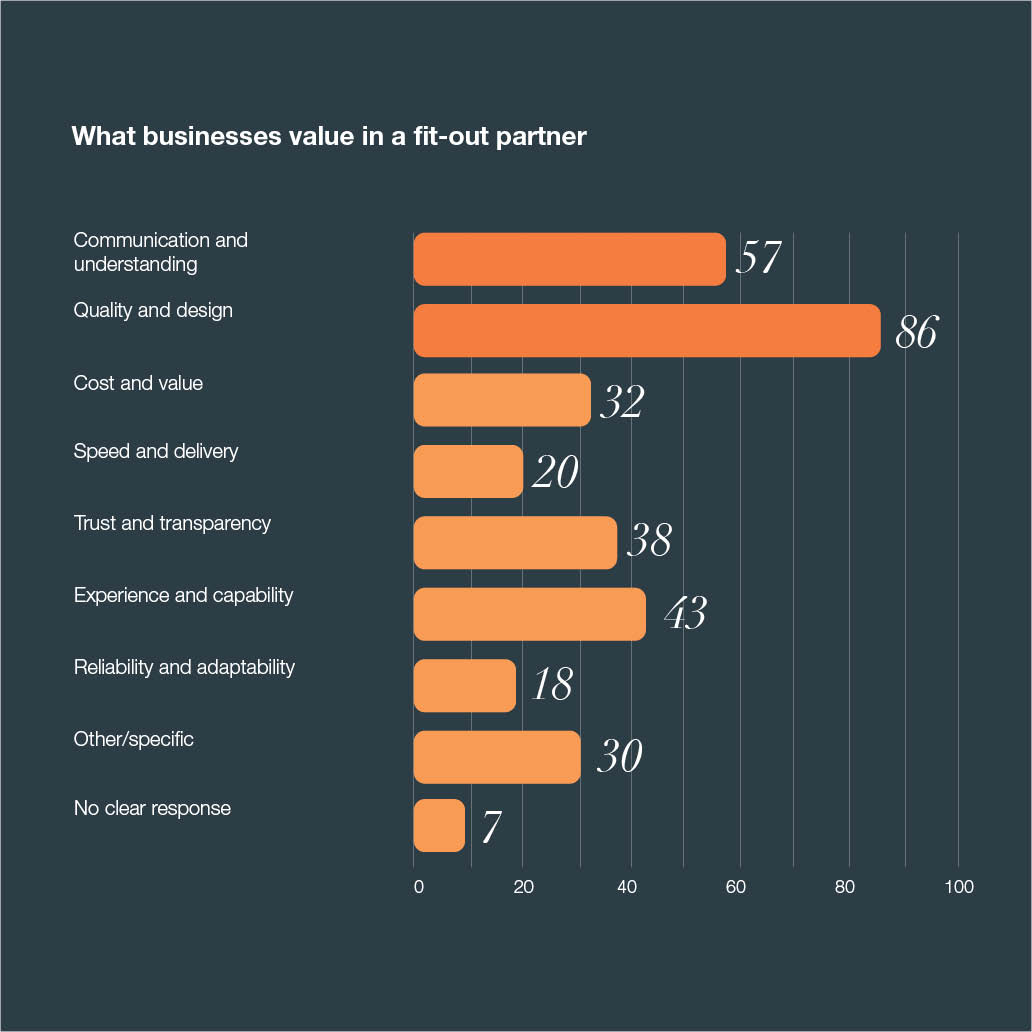
The responses show that clients are considering both the quality of the final workplace and how the project is managed.
Communication, experience, trust and reliability all influence whether a business feels confident in its delivery partner. That matters because an office relocation involves more than design and construction. Workplace strategy, property decisions, budgets, approvals, project management, construction and relocation all need to stay coordinated.
What should businesses consider before their next office move?
The strongest message from the survey is the value of starting earlier.
Businesses should understand:
- What the workplace needs to achieve
- How much space they actually require
- How people will use the office
- Who needs to be involved in key decisions
- What budget is available
- How long the move will realistically take
- Whether potential properties can support those requirements
Getting these questions answered earlier gives leaders more choice when assessing property and reduces the likelihood of expensive changes later.
An office move is a significant financial and operational decision. A clear brief, realistic budget and coordinated delivery team give businesses greater control from property selection through to opening day.
Spaceful helps businesses plan and deliver office relocations through one integrated team spanning workplace strategy, design, project management and construction. By getting involved before key property decisions are locked in, we help businesses establish their requirements, understand cost and programme implications, and carry that clarity through to delivery.
Methodology
Spaceful surveyed 331 attendees across PCA office leasing report release events in Melbourne and Sydney, comprising 146 Melbourne respondents and 185 Sydney respondents. Workplace review triggers and fit-out mistakes allowed multiple selections. Fit-out partner responses were free-text answers grouped into common themes.